Introduction
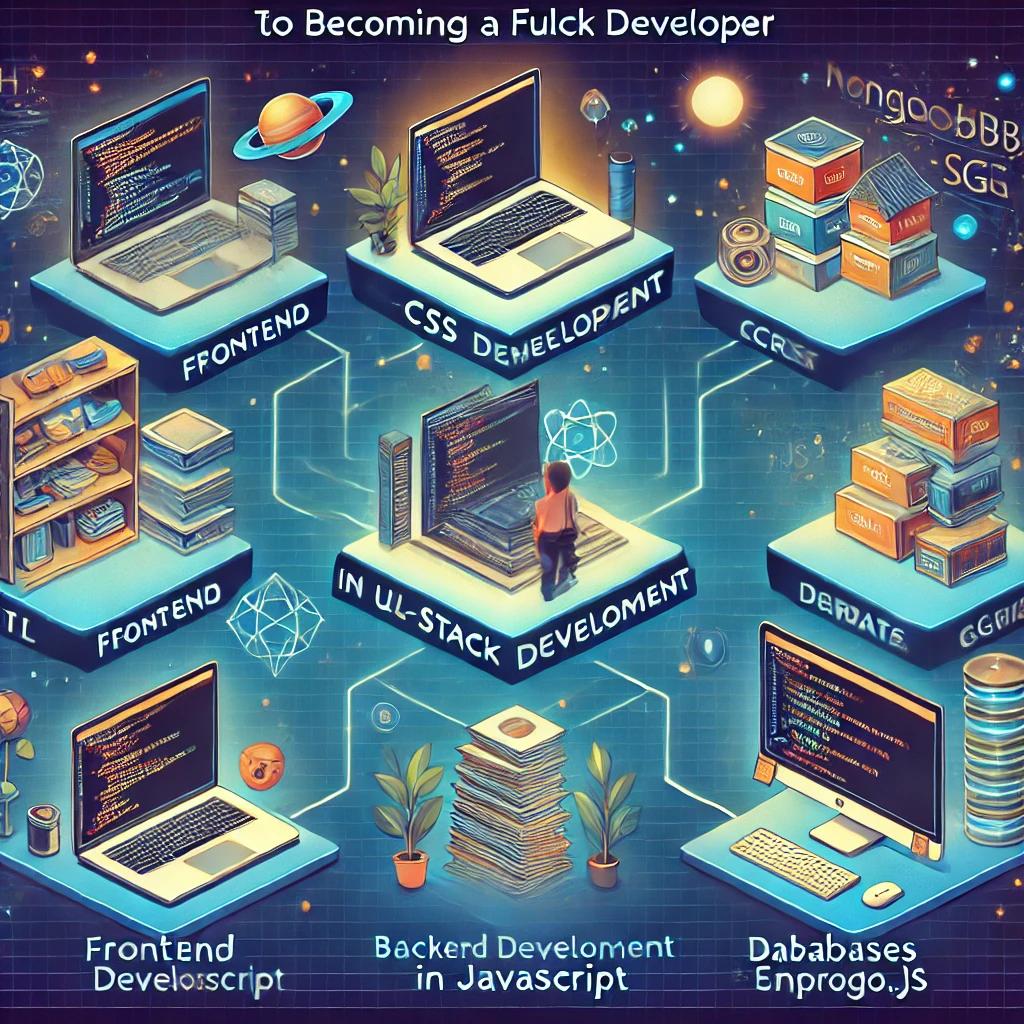
The demand for skilled full-stack developers is skyrocketing. These versatile professionals are in high demand across industries, offering exciting career prospects and competitive salaries. If you're driven and dedicated, becoming a full-stack developer in 6 months is achievable. This guide will outline a structured approach to help you reach your goal.
1. Foundational Knowledge Programming Fundamentals:
Data Structures and Algorithms: A strong foundation in data structures (arrays, linked lists, trees, graphs) and algorithms (sorting, searching, dynamic programming) is crucial for efficient and optimized code. Object-Oriented Programming (OOP) Concepts: Grasp core OOP principles like encapsulation, inheritance, polymorphism, and abstraction. Languages like Java, Python, and C++ are excellent for learning OOP. Version Control (Git): Learn how to use Git for tracking code changes, collaborating with other developers, and managing different versions of your projects.
2. Front-End Development HTML, CSS, and JavaScript:
These are the building blocks of the web. HTML: Learn to structure web pages using HTML tags. CSS: Style web pages with CSS to make them visually appealing and user-friendly. JavaScript: Add interactivity and dynamic behavior to web pages using JavaScript. Front-End Frameworks: React, Angular, or Vue.js: Choose one and master its core concepts, component-based architecture, and state management. UI/UX Design Basics: Understand basic principles of user interface and user experience design to create intuitive and user-friendly web applications.
3. Back-End Development Server-Side Languages:
Python (with frameworks like Django or Flask), Node.js, Ruby on Rails, or Java (with Spring Boot): Choose one language and learn its syntax, core libraries, and how to build RESTful APIs. Databases: Relational databases (MySQL, PostgreSQL) and NoSQL databases (MongoDB, Cassandra): Learn how to design database schemas, perform CRUD operations, and write efficient SQL queries. Cloud Computing (Optional): Gain basic knowledge of cloud platforms like AWS, Azure, or Google Cloud for deploying and scaling web applications.
4. Full-Stack Development Build Real-World Projects:
The best way to learn is by doing. Personal Projects: Start with small projects and gradually increase complexity. Open-Source Contributions: Contribute to open-source projects to gain real-world experience and collaborate with other developers.1 1. phanindaradabala.medium.com phanindaradabala.medium.com Continuous Learning: The tech world is constantly evolving. Stay updated with the latest technologies and trends by reading blogs, watching tutorials, and attending online courses.
5. Learning Resources Online Courses:
Platforms like Coursera, Udemy, edX, and freeCodeCamp offer a wide range of full-stack development courses. Interactive Coding Platforms: Platforms like HackerRank, LeetCode, and Codewars provide coding challenges to improve your problem-solving skills. Books: Several excellent books on web development and full-stack development are available.
6. Time Management and Dedication Consistent Effort:
Dedicate at least 3-4 hours of focused study time daily. Create a Study Plan: Break down your learning goals into smaller, manageable tasks. Stay Motivated: Find a learning community or mentor for support and guidance.
7. Career Paths
Full-stack developers have diverse career options:
Web Developer Software Engineer Front-End Engineer Back-End Engineer Full-Stack Engineer Mobile App Developer Freelance Developer Startup Co-founder Conclusion Becoming a full-stack developer requires dedication, hard work, and continuous learning. By following a structured approach and leveraging available resources, you can achieve your goal within 6 months. Remember to stay motivated, embrace challenges, and enjoy the journey of learning and building amazing things.
Comments (0)
Categories
Recent posts
.png)
.png)
Demystifying Full Stack Development: A ...
5 Aug 2024
Top 10 Machine Learning Institutes in ...
11 Feb 2025.png)
Full Stack Development Tools and ...
5 Aug 2024