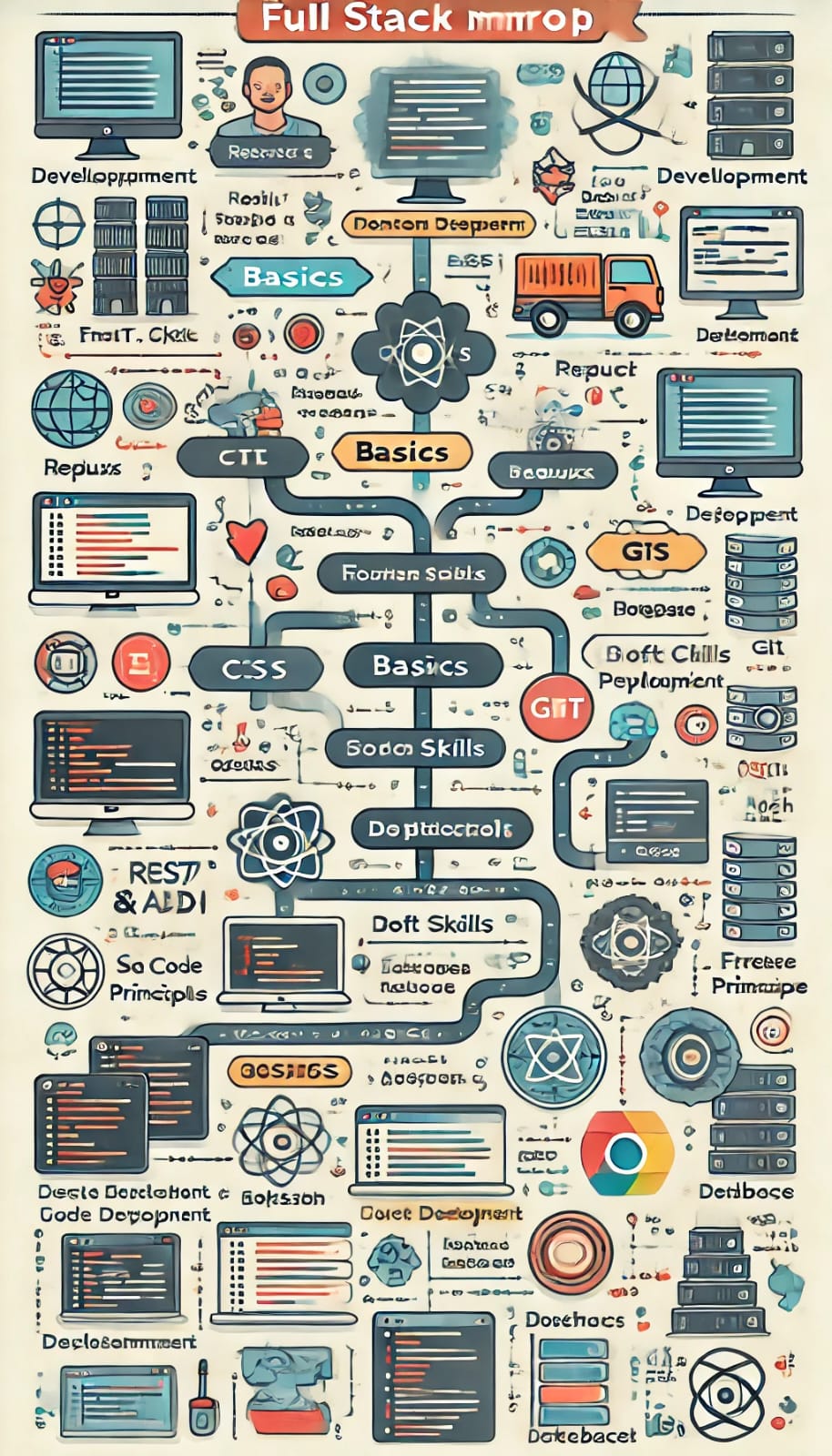
The world of web development is vast and exciting, and becoming a Full Stack Developer
opens doors to a fulfilling and rewarding career. But where do you even begin? This
roadmap will guide you through the essential steps, technologies, and resources to embark
on your Full Stack Development journey.
1. Foundational Concepts
Understanding the Web:
Start by grasping the fundamental concepts of how the internet
works. Learn about HTTP, HTML, CSS, and how they interact to create web pages.
Basic Programming Concepts:
Familiarize yourself with core programming concepts like
variables, data types, control flow (if/else statements, loops), functions, and object-oriented
programming (OOP).
Choosing a Programming Language: Select a versatile language like JavaScript, Python, or
Ruby to build your foundation. These languages offer extensive libraries and frameworks for
both frontend and backend development.
2. Frontend Development
HTML (HyperText Markup Language):
Learn to structure web pages using HTML tags.
Master semantic HTML for better accessibility and search engine optimization (SEO).
CSS (Cascading Style Sheets):
Style your web pages with CSS. Explore CSS properties,
selectors, and layout techniques (flexbox, grid) to create visually appealing and responsive
designs.
JavaScript:
This is the cornerstone of interactive web development. Learn core JavaScript
concepts, manipulate the Document Object Model (DOM), and work with asynchronous
programming (promises, async/await).
Frontend Frameworks (Optional):
Consider learning a popular frontend framework like
React, Vue.js, or Angular. These frameworks provide reusable components, improve code
maintainability, and accelerate development.
3. Backend Development
Server-Side Languages:
Choose a backend language based on your interests and career
goals. Popular options include Node.js (JavaScript), Python (with frameworks like Django or
Flask), Ruby on Rails, and Java.
Databases:
Learn how to interact with databases to store and retrieve data. Start with SQL
(Structured Query Language) for relational databases like MySQL or PostgreSQL. Explore
NoSQL databases like MongoDB for more flexible data structures.
API Development:
Learn to build and consume APIs (Application Programming Interfaces) to
enable communication between different parts of an application or with external services.
Backend Frameworks (Optional):
Explore backend frameworks that provide structure and
streamline development. Examples include Express.js (Node.js), Django/Flask (Python), and
Ruby on Rails.
4. Full Stack Integration
Build Projects:
The best way to learn is by doing. Start with small projects and gradually
increase complexity. Build to-do lists, simple blogs, e-commerce websites, or social media
applications.
Version Control:
Learn to use Git, a powerful version control system, to track changes to
your code, collaborate with others, and manage different versions of your projects.
Deployment:
Learn how to deploy your applications to the web using platforms like Heroku,
Netlify, or AWS.
5. Continuous Learning
Stay Updated:
The tech world evolves rapidly. Continuously learn new technologies,
frameworks, and best practices to stay competitive.
Engage in the Community:
Join online forums, attend meetups, and contribute to
open-source projects to connect with other developers, learn from experienced
professionals, and build your network.
Build a Portfolio:
Showcase your projects on platforms like GitHub or create a personal
website to demonstrate your skills and attract potential employers.
Documentation and Tutorials:
Utilize official documentation and tutorials for the technologies
you're learning.
Books: Explore books on web development fundamentals, specific technologies, and best
practices.
Key Takeaways
Consistency is Key: Dedicate consistent effort to your learning journey.
Focus on Fundamentals: Build a strong foundation in core concepts before diving into
advanced topics.
Practice Regularly: The more you code, the better you'll become.
Embrace Challenges: Don't be afraid to tackle challenging projects and learn from your
mistakes.
Enjoy the Process: Web development can be a rewarding and fulfilling journey. Embrace the
learning process and enjoy the satisfaction of building something from scratch.
This roadmap provides a general framework. Feel free to customize it based on your
learning style, career goals, and interests. The most important thing is to start your journey,
stay curious, and never stop learning.
Note: This blog post is designed to be informative and SEO-friendly. You can further
enhance it by:
Adding visuals: Include relevant images, diagrams, or code snippets to make the content
more engaging.
Conducting keyword research: Use tools like Google Keyword Planner to identify additional
relevant keywords and incorporate them naturally into the text.
Building backlinks: Promote your blog post on social media and other relevant platforms to
attract backlinks from reputable websites.
Comments (0)
Categories
Recent posts
.png)
.png)
Demystifying Full Stack Development: A ...
5 Aug 2024.png)
Full Stack Development Tools and ...
5 Aug 2024
Better Relationship Between Friends
1 Jul 2021.png)